
The science behind InnerOS
InnerOS is built on ideas with real research behind them: Internal Family Systems (IFS), the work of Carl Jung, and Playback Theatre. InnerOS itself has not been tested in a clinical trial, and we do not say it treats anything.
Below are the papers, in plain words, and what they did and did not find.
What we mean by “parts”
Most of us know the feeling. One side of you wants to rest. Another side says keep going. Another side is just scared.
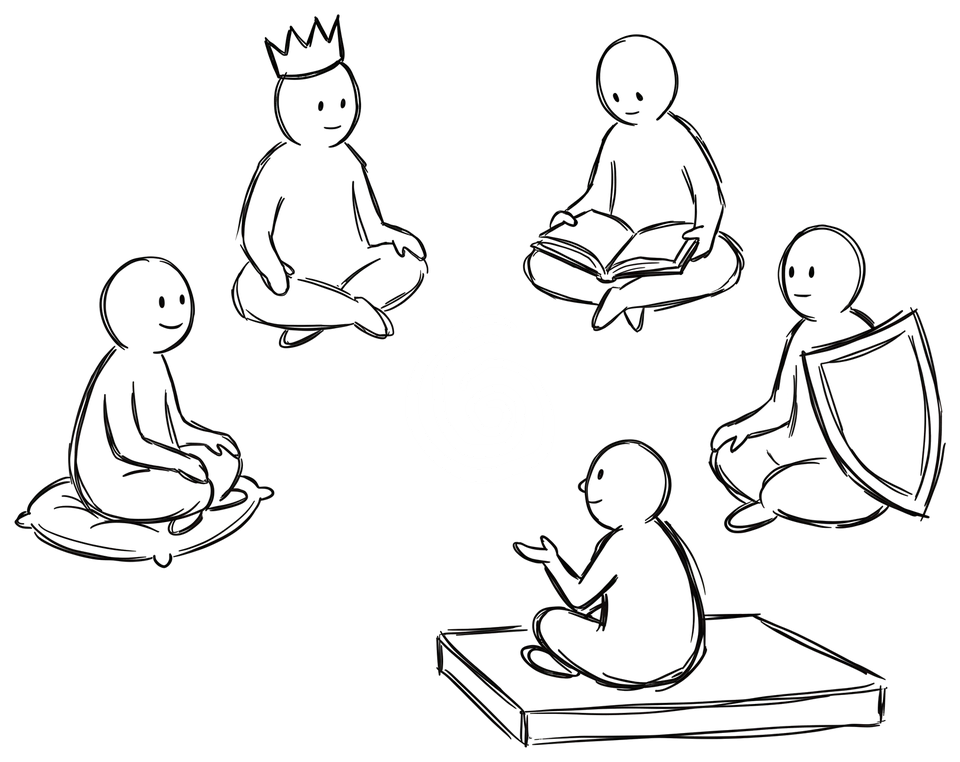
IFS is a way of working with that. It says the mind is not one voice. It is a group of inner parts, and each part is trying to help in its own way. Some parts protect us. Some carry old hurt. And underneath them there is a calm, caring centre that IFS calls Self.
The aim is not to get rid of a part. It is to listen to it. IFS was started by Richard Schwartz in the 1980s. His group, the IFS Institute, trains therapists in it.
InnerOS borrows this idea of listening to parts. It is the main thing the app is built on.
What the research on IFS found
IFS is still a young field of study. The papers we know of are small. Here are two, and we have tried not to say more than they say.
Rheumatoid arthritis, 2013
Researchers gave 79 adults with rheumatoid arthritis either a 9-month IFS group or an education group. This was a proof-of-concept trial. The education group got mailed materials. Right after the group ended, the IFS group did better on overall pain and physical function. A year later, they were still better on joint pain, self-compassion and low mood. There was no lasting change in anxiety, self-efficacy or disease activity. The authors say more trials are needed.
Shadick, N. A. et al. (2013). A randomized controlled trial of an Internal Family Systems-based psychotherapeutic intervention on outcomes in rheumatoid arthritis: a proof-of-concept study. The Journal of Rheumatology, 40(11), 1831-1841. Read it on PubMed
Childhood trauma, 2021
A small pilot study looked at adults who had lived through many hard things as children. After IFS therapy, their PTSD symptoms were lower. This was a pilot, so it shows a hopeful sign. It does not prove IFS works for everyone.
Hodgdon, H. B. et al. (2021). Internal Family Systems (IFS) therapy for posttraumatic stress disorder (PTSD) among survivors of multiple childhood trauma: A pilot effectiveness study. Journal of Aggression, Maltreatment & Trauma. Read the article
Both studies tested IFS led by trained therapists. They did not test InnerOS.

Where Jung comes in
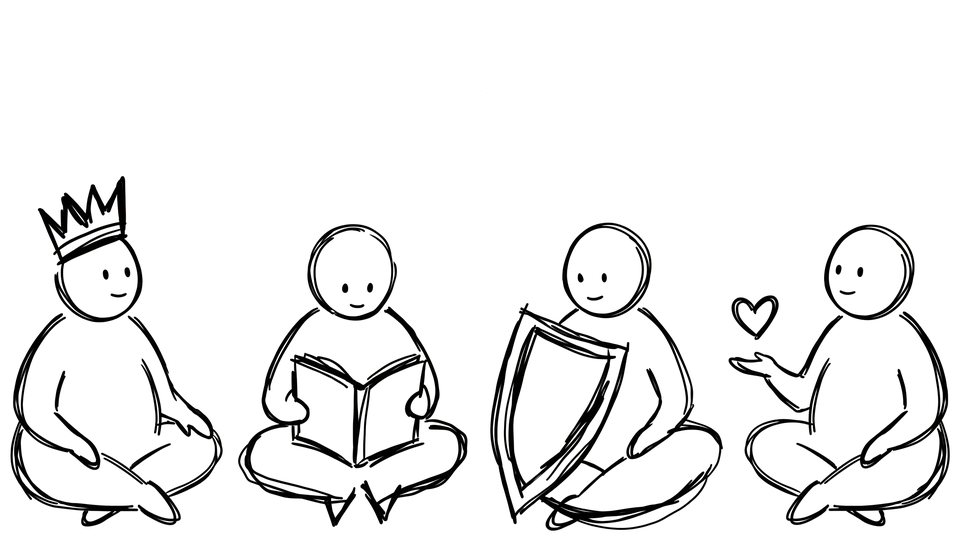
Carl Jung was a Swiss psychiatrist. He wrote that people share old patterns, which he called archetypes. The Sovereign, the Warrior, the Sage, the Lover and others show up in myths, dreams and stories all over the world.
He also wrote about the shadow. That is the part of us we push out of sight because we think it is not acceptable. Jung did not think the shadow was evil. He thought we grow when we turn toward it.
Jung's ideas come from his clinical work and his writing, not from trials. They are a rich way to understand ourselves. They are not a proven treatment.
Jung, C. G. (1959). The Archetypes and the Collective Unconscious. Collected Works, Vol. 9, Part 1. Princeton University Press.
InnerOS uses archetypes as names and faces for parts, so a feeling is easier to meet. Want to try it? Read about shadow work or take the archetype quiz.
Hearing your story told back: Playback Theatre
Playback Theatre began in New York in 1975. In a show, someone from the audience tells a true moment from their life. A conductor helps them tell it. Then actors play the story back, right there, with no script. The teller watches their own story from the outside, and is asked whether it rang true.
InnerOS works the same way, for one person's parts. You tell what is on your mind. Self, the calm centre, conducts. Your parts play it back, each from where it stands, in your own words. Then you say whether it was true. You leave with one small step you chose.


After a hurricane, 2020
A small pilot study worked with 13 people affected by Hurricane Harvey in Houston. After a series of four Playback Theatre shows, their anxiety and PTSD symptoms were lower. Their low mood did not change by a clear amount. The study measured the same people before and after. It is a hopeful sign, not proof.
Munjuluri, S. et al. (2020). A pilot study on Playback Theatre as a therapeutic aid after natural disasters: brain connectivity mechanisms of effects on anxiety. Chronic Stress, 4. Read the study
A review of the research, 2024
Researchers searched four large research databases for Playback Theatre studies from 1990 to mid 2023. They found 79 articles, and 18 of them measured its effects. It had been used with children, adults and older adults. The authors say the results support Playback Theatre for growing thinking, social and emotional skills, and that studies need to report their effects more clearly.
Gonzalez, A.-J. et al. (2024). Playback Theatre applications: A systematic review of literature. The Arts in Psychotherapy, 89, 102152. Read the review
Both are about live Playback Theatre with people in a room. They did not test InnerOS.
How InnerOS puts these together
You write what is on your mind. Your parts answer, one at a time, each in its own voice. They speak as "I" and "we", like a real inner conversation.
IFS gives the idea that you are made of parts. Jung gives the cast, the old patterns we can name. Playback Theatre gives the form: you tell, your parts play it back, and you say if it rang true. The app is a place to practise listening.
To learn more about the model, read about our IFS parts app.
What InnerOS is, and is not
InnerOS is a place to listen to yourself, with ideas that have real research behind them.
It has not been tested in a clinical trial. We are an early product, and we will not claim results we do not have.
It does not diagnose, treat or cure anything. It is not a medical device and it is not FDA-authorized.
If you already work with a therapist, it can sit beside that work. It does not replace it.
Your journal is encrypted with a key that belongs to you alone (AES-256). The keys are kept on our servers, so it is not end-to-end encrypted.
The science behind InnerOS: common questions
Is InnerOS clinically proven?
No. InnerOS has not been tested in a clinical trial. It is built on ideas that have research behind them, like IFS, but the app itself is not proven to treat anything.
What is Internal Family Systems (IFS)?
IFS is a way of understanding the mind as a group of inner parts, each trying to help in its own way, with a calm centre called Self underneath. It was started by Richard Schwartz in the 1980s. The aim is to listen to parts, not remove them.
Is there research on IFS?
Yes, but it is still small. A 2013 proof-of-concept trial in rheumatoid arthritis found the IFS group did better on pain and physical function, and a year later on self-compassion and low mood, but with no lasting change in anxiety. A 2021 pilot study found lower PTSD symptoms after IFS therapy for adults with childhood trauma. Both were led by trained therapists and neither tested InnerOS.
Did Carl Jung prove that archetypes exist?
No. Jung's archetypes come from his clinical work and writing, not from trials. Many people find them a useful way to name patterns in themselves. InnerOS uses them that way, as names and faces for parts.
Is InnerOS a replacement for therapy?
No. InnerOS is not therapy and cannot diagnose or treat anything. If you see a therapist, it can sit beside that work. If you are in crisis, please contact a crisis line or a licensed professional right now.
Is my journal private?
Your journal is encrypted with a key that belongs to you alone (AES-256). The keys are kept on our servers, so it is not end-to-end encrypted.

InnerOS is not therapy
InnerOS is a place to listen to yourself. It is not therapy and it cannot treat or diagnose anything. It is not for a crisis. If you are in crisis or in danger, please reach out to a crisis line or a licensed professional right now.

Read the papers. Then try listening.
Let one part speak first. You only have to listen.
Try it free for 14 daysTake the archetype quiz14-day free trial. Then $19.99/month or $79.99/year.